
Free calculator
Check now
Vending cost check
Estimate the annual cost of your current workplace coffee, hydration and vending setup and see where savings may be possible.
Buy coffee, water and vending separately and you often pay twice for the same need. Planning them together avoids that overlap.
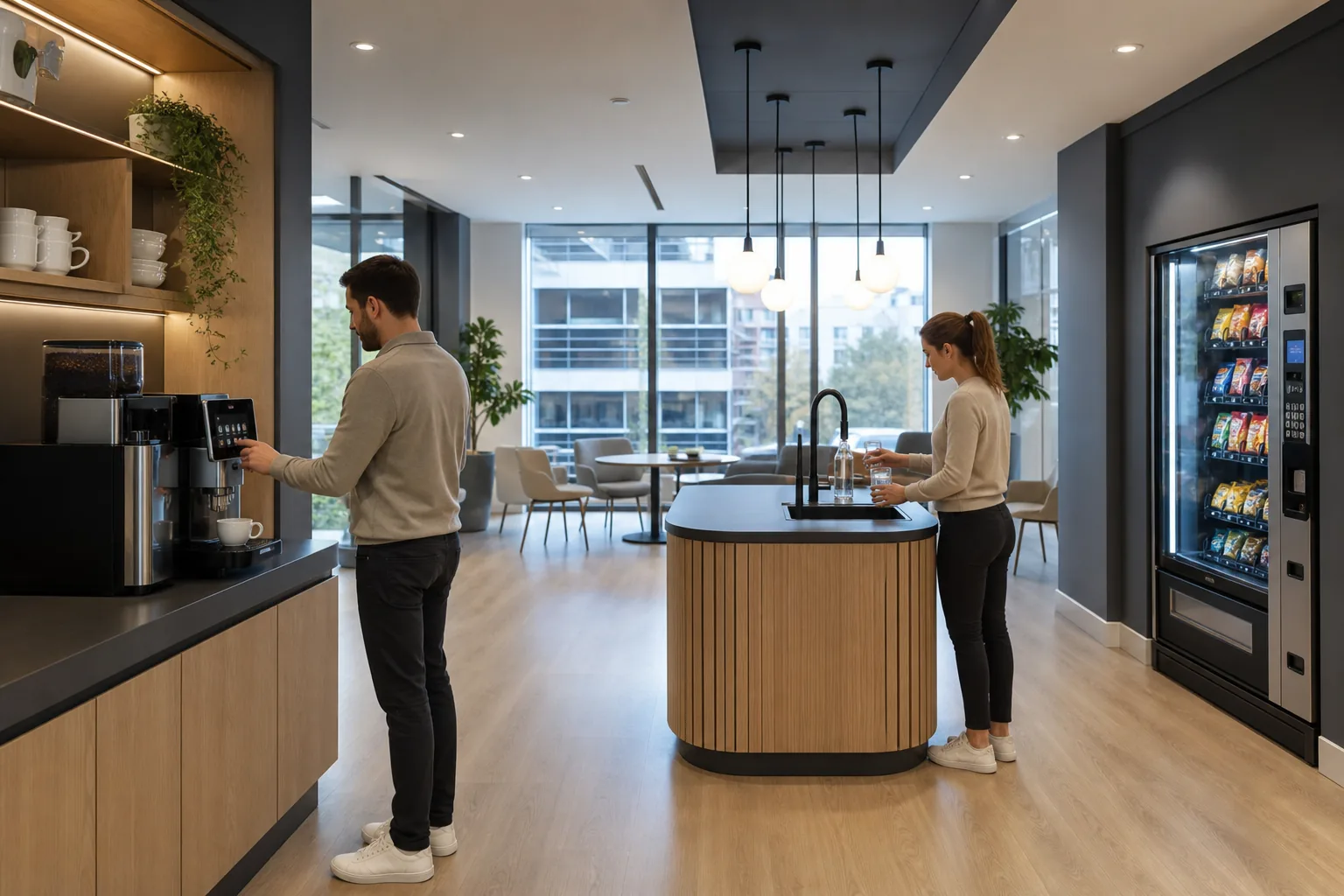
In short: Planning the three together stops you paying twice for the same need. A boiling tap removes the kettle and takes hot-drink pressure off the coffee machine. A chilled tap reduces demand for cold drink vending. Snack vending covers what neither does. Specified in isolation, these overlap and you over-buy, usually a larger coffee machine than the site needs.
It is rarely a decision. Coffee is usually the urgent one, so it gets solved first. Hydration comes up later, often prompted by a sustainability discussion or a broken cooler. Vending arrives when someone points out there is nowhere to get food after five.
Each decision is sensible in isolation, and each is made without reference to the others, frequently by different people, at different times, against different budgets.
The result is predictable. Capacity gets bought twice, machines end up in the wrong places relative to each other, and the site ends up with three suppliers, three service arrangements and three points of contact for what is really one question.
The useful starting question is not what equipment you want, but what people need at each location and how long they have to get it.
Walk the building and note the distinct situations. The main kitchen serves everyone and takes the morning spike. Meeting floors need hot drinks for visitors and water on the table. Production or warehouse areas need cold drinks and something substantial in a short break. Reception needs to look after visitors. Night shifts need everything available without anyone unlocking a cupboard.
Each of those is a specification. Some are solved by one machine, some by two, and a few need nothing at all once you look properly.
Three overlaps account for most of the wasted spend.
Hot drinks. A boiling tap serves tea, instant drinks and anything needing hot water. Where a tap is installed, a meaningful share of hot drink demand never reaches the coffee machine, which means the coffee machine can often be a band smaller than a headcount calculation suggests.
Cold drinks. A chilled tap and reusable bottles cover routine hydration. Cold drink vending then becomes about choice, a soft drink someone actually wants, rather than about basic hydration, which usually means a smaller machine or none at all in office areas.
Food and snacks. This is the one thing neither coffee nor hydration touches, and it is the gap most often left unfilled while the other two get over-specified.
The most common over-spend we see is a large bean-to-cup machine bought for a site that later installs a boiling tap. The tap absorbs the tea and instant drinkers, and the coffee machine spends its life at half its rated capacity.
The clearest way to see the difference is to specify the same building twice, once as three separate decisions, and once as one.
A 150-person office over two floors, with around 100 people in on a busy day and a meeting suite on the upper floor.
Specified separately, you would land on a coffee machine sized for 150 people on the main floor, a bottled cooler on each floor, and a snack and drink vending pair by reception. Every one of those decisions is defensible on its own.
Planned together it looks different. A boiling and chilled tap in each kitchen covers tea, instant drinks and all routine hydration, and removes both coolers and both kettles. That takes enough load off the coffee machine to drop it a full capacity band, a unit rated around 120 cups a day, such as a WMF 1300 S or Bravilor Esprecious, serves the main floor comfortably instead of the 200-cup machine headcount alone would have justified. The meeting floor gets a smaller bean-to-cup for visitors and a chilled tap for jugs. One snack machine near reception covers food, and cold drink vending becomes optional rather than assumed.
Same needs met, less equipment, and a capacity band saved on the single largest line in the plan. That band is the saving future® Vending points to most often, and it only appears if hydration is decided before coffee is ordered.
You do not have to do everything at once, and most sites should not. What matters is deciding the whole plan before installing the first piece, so that each stage assumes the others are coming.
A sensible order is hydration first, because it is the cheapest to run, changes kitchen habits most, and tells you what hot drink demand really looks like once the kettle has gone. Coffee second, sized against what is left rather than against headcount. Vending last, filling the gap that remains once you can see what people are actually not getting.
Doing it in that order tends to save a capacity band on the coffee machine, which is usually the largest single line in the whole plan.
There is a practical argument for keeping the three together beyond the specification itself. One site check covers all of it. One service arrangement means one number to call. Filter changes, machine servicing and replenishment visits can be coordinated rather than arriving on three separate days.
It also means the trade-offs get made in one conversation. When hydration and coffee are quoted by different suppliers, neither has any reason to tell you that a boiling tap should shrink your coffee machine.
That is the honest reason joined-up planning saves money: not procurement leverage, but the fact that somebody is looking at the whole picture.
Whatever you plan, some of it will be wrong, and that is fine as long as you look. Usage patterns settle within a few months and they rarely match the forecast exactly.
The things worth checking are simple. Is anywhere queueing at peak. Is any machine consistently under-used. Has the vending range settled into a pattern where the same items sell and others never move. Has attendance shifted since you specified.
Small adjustments at six months, such as relocating a machine, adjusting a product range or adding a second refill point, are cheap. The same problems left for three years become the reason the whole setup gets replaced.
Tell us about your people, peaks and space. We will recommend a practical starting point and explain the trade-offs clearly.
Request a free proposalShort answers to the points that come up most often when you are choosing equipment.
Speak to our teamBecause they overlap. A boiling tap absorbs tea and instant drinks that would otherwise load the coffee machine, and a chilled tap reduces cold drink vending demand. Planned separately, you typically buy more capacity than the site needs.
Often yes. Tea and instant drinkers served by a tap never reach the coffee machine, which can move the requirement down a capacity band and save a significant amount on the largest item in the plan.
Hydration first, because it is cheapest to run and reveals true hot drink demand once kettles go. Coffee second, sized against what remains. Vending last, to fill the gap that is left.
It is usually simpler, one site check, one service arrangement, one point of contact. It also means the trade-offs between the three get considered together rather than by suppliers with no reason to shrink their own quote.
At around six months, once usage settles. Check for queues at peak, under-used machines and vending lines that never sell. Small adjustments then are far cheaper than replacing the setup later.
Tell us what you are looking for and we will recommend the right coffee, water or vending setup for your site.
Estimate the annual cost of your current workplace coffee, hydration and vending setup and see where savings may be possible.
Estimate the cost of ending a current vending, coffee machine or refreshment agreement and review potential switch savings.